eSIM vs. physical SIM: the only difference that matters
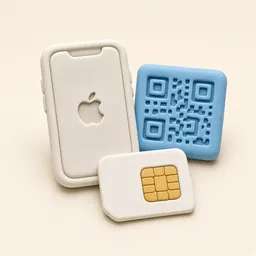
A SIM stores the credentials that let your phone join a mobile network. A physical SIM stores them on a chip inside a plastic card. An eSIM (embedded SIM) stores them on a chip that is soldered inside the phone, and you load the credentials — called a "profile" — over the internet.
Everything else is identical: same networks, same speeds, same coverage. The carrier cannot tell whether you are on an eSIM or a plastic SIM.
Why travelers switched to eSIM
- No hunting for a SIM kiosk after a 12-hour flight.
- Your home SIM stays in the phone, so calls and texts to your real number still arrive.
- You can buy and install before you fly, on home Wi-Fi.
- Modern phones hold several eSIM profiles — one for every trip, or one reusable one like eSIM BFF.
- No passport registration or paperwork in countries that require it for local SIMs.
How installation works
- Buy a plan. You receive a QR code (or a one-tap install link on iPhone).
- Open Settings → Cellular (iPhone) or Settings → Network → SIMs (Android) and choose "Add eSIM".
- Scan the QR code or tap the link. The profile downloads in about a minute.
- Label the line ("Travel"), set it as your mobile-data line, and turn on Data Roaming for it.
- Land, and the plan activates the first time it sees a supported network.
Which phones support eSIM?
Almost every phone released since 2019 at the mid-range and up. iPhone XS/XR and later, Google Pixel 3 and later, Samsung Galaxy S20 and later, and most recent Motorola, OnePlus, Xiaomi and Oppo flagships. Dial *#06# — if an EID appears, you are eSIM-ready.
The catch: the phone must be carrier-unlocked. A phone still on a contract from a US or Canadian carrier may be locked and will refuse a travel eSIM until the carrier unlocks it.
Data-only vs. eSIM with a number
Most travel eSIMs — including eSIM BFF — are data-only. You keep your own number for calls and SMS through your home SIM and use WhatsApp, FaceTime or Telegram over the eSIM data. This is why travel eSIMs cost a few dollars instead of the roaming rates carriers charge.
Frequently asked
Can I have an eSIM and a physical SIM at the same time?
Yes. That is the normal travel setup: home SIM for calls and texts, eSIM for data.
Does an eSIM drain battery faster?
No more than a second physical SIM would. Dual-SIM standby costs a few percent of battery per day at most.
Can I move my eSIM to a new phone?
Some carriers let you transfer; most travel eSIMs are single-install. Buy for the phone you will actually travel with.